Active Spelling
As a federation, we use research and evidence to select the most effective strategies for teaching to ensure that all of our children flourish. Active Spelling is aimed at years 2 - 6 as a whole school approach and builds on the Little Wandle phonics foundations of EYFS and Year 1.
The approach is aligned with the National Curriculum and provides a systematic approach to spelling and vocabulary acquisition. Active Spelling uses the principles of mnemonics, images and verbal reasoning to aid both the retention of spellings and to develop a breadth of vocabulary.
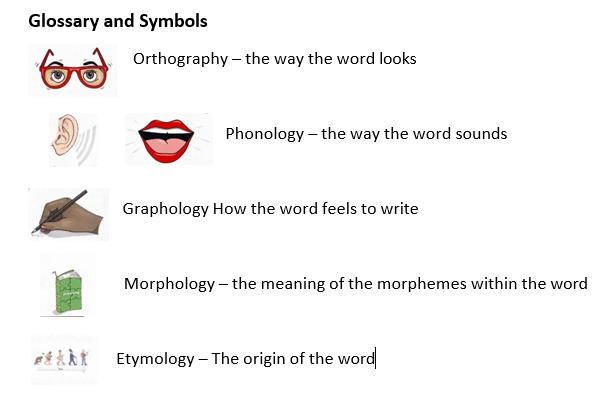
The sessions are led by each class teacher three-four times a week, for 15 - 20 minutes. In each lesson, children recall previously learnt spellings to aid retention of spelling patterns and rules. Children are then taught different strategies to help them to learn new spellings that they become increasingly able to apply independently. To fully understand the spelling patterns, Active Spelling uses orthography (the way a word looks), phonology (the way a word sounds), morphology (the meaning of the word), etymology (the origin of the word, which country and language it originates from), and graphology (how it feels to write). They then check and apply.
Research recommendations indicate that the use of low stakes testing (a form of retrieval practice, allowing pupils to recall what they have learnt from memory) is extremely effective in helping children to learn spelling patterns and rules. Consequently, we have removed the high stakes weekly spelling tests, which means no word lists are sent home. Children regularly revisit learning, ensuring it is well spaced and aids memory. No word lists are sent home as over the week children will learn and revisit their spellings through ongoing assessment and support from the teacher to effectively enable all children to succeed.

|
Active Spelling Programme | [pdf 567KB] |

|
Active Spelling
Active Spelling is an approach to teaching an understanding of spelling and vocabulary for children in Year 2 to 6.
It uses the principles of mnemonics, images and verbal reasoning (through a dialogic talk based approach) to aid the retention of spellings and in turn develop the breadth of vocabulary.
The sessions are fast paced, visual and very active, lasting for 15 – 20 minutes. In key stage 1 the approach is instructive with the teacher heavily modelling their choices on how to learn a new spelling. As the years progress, teachers deploy a Gradual Release of Responsibility Model, encouraging the children to independently select a method to learn and retain a spelling or a spelling pattern.
The teaching approach has four distinctive phases:
Phase One: Recall
To enable the retention of learning, learning must be revisited and well-spaced. This aspect of the programme ensures that this happens in each session.
Phase Two: Learn
Two words are introduced each day. Each week’s spelling list follows a pattern which is referred to and revisited each day to embed the pattern behind the spellings. The children learn the meaning of each work to develop their vocabulary. They create connections between words they already know and those they are learning. This helps them to develop schema in their minds to store words and their meanings in appropriate sections so that they can easily be retrieved.
Phase Three: Correct
Before children can be expected to correct spelling mistakes in their own work, they must first be taught how to do so by recognizing if a spelling ‘looks and ‘sounds’ right. This section of the approach uses phonology, orthography, and graphology as a checklist. Children learn to make the
decision whether or not they believe a word has been spelled correctly and then use graphology to trial different spellings of the word.
Phase Four: Apply
This section ensures the children have a thorough understanding of what the vocabulary means and how they can use it in their spoken and written language.
The Lesson
Recall
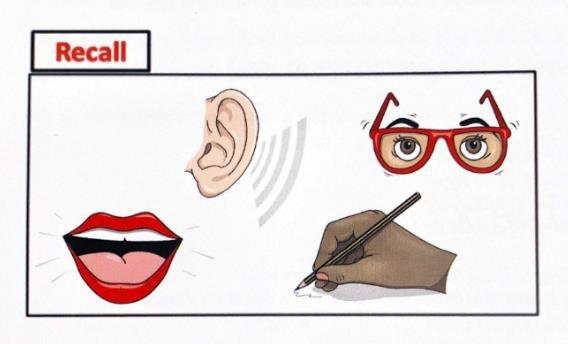
Purpose (knowledge): To develop the rapid recall of previously learnt spellings
This is faced paced. The focus is on 2 spellings learnt the previous week and 2 spellings from the previous term.
The symbols are used to help the children to practice listening to the word, saying the word, writing the word, and seeing if the word looks right.
Learn Purpose (knowledge): To learn two new spellings which follow a pattern
This slide allows for a more in depth exploration of the morphemes of meaning.
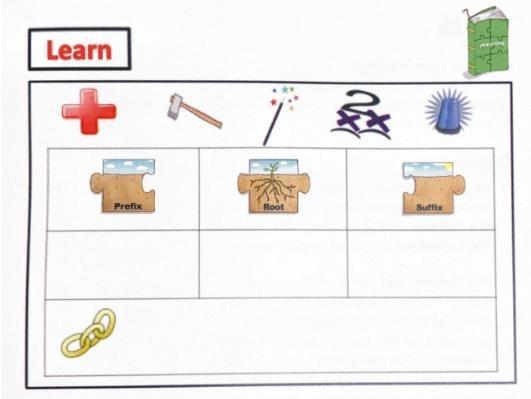
This slide guides the children through the process of selecting which approach they may use to help them to learn that particular.
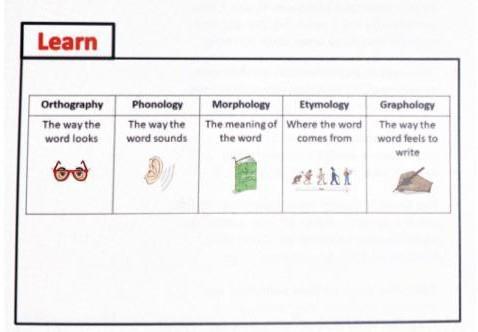
The teacher takes the time to create a schema to help children to expand their vocabulary as well as create connections between the words they already know and the words they are learning, thus aiding retention.
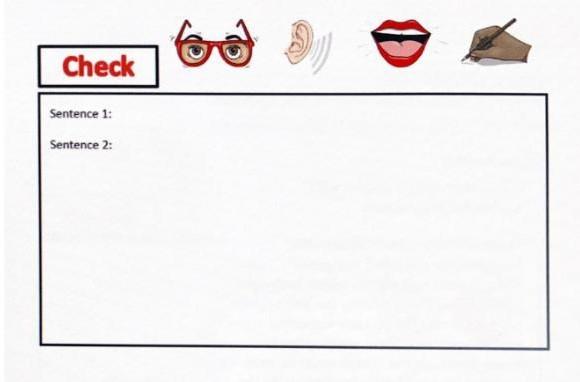
Check
Purpose (application): The children apply their knowledge of the words they have begun to learn on the previous slides and from the teacher’s assessment for learning.
The children are given two sentences to read and correct.
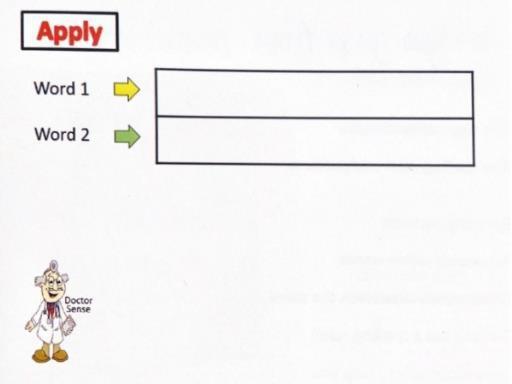
Apply
Purpose (application and analysis): The children use and apply their knowledge of the meaning of the words by using them in grammatically correct sentences.
This can be completed verbally or in written form.
Dr Sense is there to remind children that their sentence must make sense grammatically and structurally.
